
Straightening your teeth as an adult is not vanity — crowded, rotated or poorly meeting teeth are harder to clean, wear unevenly, and can make biting uncomfortable. But once you decide to do something about it, the next question stops a lot of people: braces, or aligners? If you are comparing braces vs clear aligners, Scarborough adults usually find the honest answer is not “which one is better” — it is “which one fits my teeth, my habits and my daily life.”
This guide walks through that decision the way it is actually made at an assessment: how each system moves teeth, the cases that usually suit braces, the cases that usually suit clear aligners — including the honest catch that aligners only work when they are actually in your mouth — and the day-to-day differences in eating, speaking, cleaning and appointments. If you want the service picture first, read about orthodontic care at AF Dental, then come back here for the comparison.
On this page:
- How Braces and Clear Aligners Each Move Teeth
- Cases That Usually Suit Braces
- Cases That Usually Suit Clear Aligners — and the Honest Catch
- Eating, Speaking, Cleaning and Appointments: The Day-to-Day Differences
- How Treatment Length Is Actually Decided
- What Neither Option Can Do
- Coverage, Honestly: CDCP, Insurance and Quotes
- References
- Frequently Asked Questions About Braces vs Clear Aligners
How Braces and Clear Aligners Each Move Teeth
Both systems do the same basic job: they apply gentle, steady pressure that gradually moves teeth through the bone into a planned position. They differ in how that pressure is applied — and that difference drives almost everything else in this guide.
Braces bond small brackets to the teeth, connected by a wire that is adjusted over time. Because they are fixed in place, they work around the clock and give the dentist or orthodontist direct control over complex movements — rotating stubborn teeth, moving roots, and closing larger gaps.
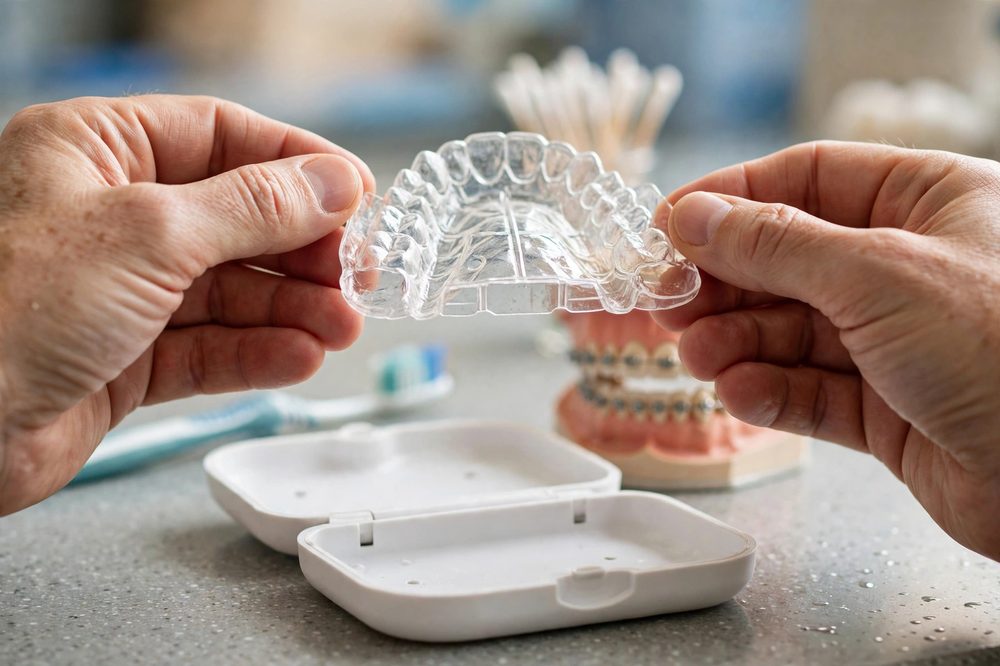
Clear aligners are a series of removable, transparent trays, each one slightly different, worn in sequence. Each tray nudges the teeth a small step toward the final position planned in advance. Because they are removable, they come out for eating and cleaning — which is both their biggest advantage and, as the next sections explain, their biggest risk.
Cases That Usually Suit Braces
Braces are usually the more reliable recommendation when:
- The movements needed are complex — significant rotations, teeth that need to move vertically, or bite problems that need precise root control.
- Several teeth need to move at once, or larger spaces need to be closed in a controlled way.
- You know you would not wear removable trays enough. This is not a character flaw; it is useful self-knowledge, and fixed braces remove the temptation entirely.
- Your work or routine makes tray discipline unrealistic — for example, long shifts with nowhere private to remove and store aligners before eating.
You can read more about the fixed option on our dental braces page.
Cases That Usually Suit Clear Aligners — and the Honest Catch
Clear aligners usually suit adults whose tooth movements are mild to moderate — crowding, spacing, and many common bite corrections — and who value being able to remove the trays for meals, photos, presentations and cleaning. They are discreet, there are no brackets to catch on your cheeks, and brushing and flossing stay exactly as they are now.
Now the honest catch, because it decides more aligner cases than anything else: aligners only work while they are being worn — typically 20 to 22 hours a day. Every hour out is an hour the teeth are not moving, and teeth also start drifting back toward where they were. Patients who keep trays out for long lunches, snack frequently, or “take weekends off” fall behind the plan; trays stop fitting properly, treatment stretches out, and sometimes earlier steps have to be repeated. None of that makes aligners a bad choice — it makes them a choice that has to match the person.
Eating, Speaking, Cleaning and Appointments: The Day-to-Day Differences
- Eating. With braces, some foods are off the menu for the duration — very hard, sticky or chewy foods can break brackets and wires. With aligners, you eat whatever you like, but the trays come out first, and teeth should be brushed (or at least rinsed well) before they go back in.
- Speaking. Aligners can cause a slight lisp for the first few days of each new tray while your tongue adapts. Braces do not affect speech for most people, though the inside of the lips needs a short adjustment period.
- Cleaning. Braces demand more: threading floss around wires, and careful brushing around brackets where plaque collects. Aligners keep your normal routine — but the trays themselves need daily cleaning, and sugary or acidic drinks should never be consumed with trays in.
- Appointments. Braces need regular adjustment visits. Aligner treatment usually involves shorter check-ins to confirm the teeth are tracking the plan and to hand over the next sets of trays.
- Comfort, honestly. Both systems involve pressure and tenderness, especially in the first days after an adjustment or a new tray. Braces add the possibility of a wire or bracket rubbing; aligners add the discipline of wear time. Neither comes without some discomfort, and anyone who promises otherwise is not levelling with you.
How Treatment Length Is Actually Decided
There is no honest answer to “how long will it take?” before an assessment, because length depends on how far teeth need to move, what the bite needs, how your bone and gums respond — and, for aligners, how consistently the trays are worn. Minor crowding can be a matter of months; comprehensive bite correction takes longer with either system. What an assessment gives you is a plan for your teeth specifically, rather than an average borrowed from someone else’s mouth. You can book an appointment to get that plan.
What Neither Option Can Do
Braces and aligners move teeth; they do not change the size or shape of the jaw itself. Some bite problems — for example, a significant jaw discrepancy in an adult, whose jaws are no longer growing — can need more than tooth movement alone, sometimes including surgical planning. Those cases are planned with, or referred to, a specialist, and a clinic that levels with you about that at the assessment is saving you from starting treatment that cannot reach the result you were shown. Both systems also end the same way: with retainers. Teeth have a lifelong tendency to drift, and whatever result you achieve is kept by wearing retainers as directed afterwards.
Coverage, Honestly: CDCP, Insurance and Quotes
Orthodontics is not covered by the Canadian Dental Care Plan (CDCP) — that applies to braces and to clear aligners, for adults and in almost all cases generally. Some private dental insurance plans include an orthodontic benefit, often with age limits or a lifetime maximum, and many adult plans exclude orthodontics entirely; your own plan booklet or insurer is the only reliable source for what it will pay. Because treatment is planned case by case, this page deliberately carries no prices: after an assessment, AF Dental provides an exact written quote for the option recommended for your teeth, so you can compare it against your coverage before you commit to anything.
References
- Canadian Association of Orthodontists — patient information on orthodontic treatment: cao-aco.org
- Canadian Dental Association — oral health information for patients: cda-adc.ca
- Government of Canada — Canadian Dental Care Plan (what services are covered): canada.ca
- Royal College of Dental Surgeons of Ontario — public register and patient resources: rcdso.org
Frequently Asked Questions About Braces vs Clear Aligners
Am I too old for braces or clear aligners?
No — there is no upper age limit. Adult teeth move the same way younger teeth do, as long as the teeth, gums and supporting bone are healthy. Gum health is checked first, because moving teeth in the presence of untreated gum disease is not done; any gum problem is treated before orthodontics begins.
Do clear aligners hurt less than braces?
Both involve pressure, and tenderness in the first days of a new tray or after a wire adjustment is normal with either system. Aligners avoid bracket and wire rubbing; braces avoid nothing about the pressure itself. Comfort differs more by person than by system, and neither option should be promised as completely comfortable.
What happens if I keep taking my aligners out?
Teeth only move while the trays are in — the target is typically 20 to 22 hours a day. Consistently wearing them less slows treatment, trays begin to fit poorly, and the plan may need to step back and repeat earlier trays. If you know that wear pattern sounds like you, fixed braces are usually the more honest recommendation.
Does the CDCP or insurance cover adult orthodontics?
The Canadian Dental Care Plan does not cover orthodontics. Some private plans include an orthodontic benefit, sometimes only for dependants under a certain age or up to a lifetime maximum. Check your own plan before assuming either way, and ask for an exact written quote after your assessment so you can do the arithmetic with real numbers.
Can I switch from aligners to braces (or the other way) partway through?
Sometimes, but it is not a free or instant change — it means replanning the case, and possibly new appliances. It is far better to choose the system that fits your teeth and your habits at the start, which is exactly what the assessment is for.
What foods do I have to avoid with braces?
Very hard foods (ice, hard nuts, crusty bread bitten into directly), sticky foods (caramels, toffee, chewing gum) and biting whole hard fruit with your front teeth are the usual restrictions, because they can break brackets and bend wires. With aligners there are no food restrictions — the trays simply come out before you eat.
Will I need a retainer afterwards?
Yes — with both systems. Teeth naturally tend to drift back, and retainers hold the result while the surrounding bone and ligaments settle, then long-term as directed. Skipping retainers is the most common reason adults end up needing orthodontic treatment a second time.
How do I find out which option suits my teeth?
Book an orthodontic assessment. The dentist examines your teeth, gums and bite, reviews X-rays, and explains which system can realistically achieve the result you want — with an exact written quote before you decide. Call AF Dental in Scarborough at (416) 792-6940 during business hours to book.