A small dark spot on an X-ray. A molar that has started catching food every time you eat. Or a check-up that ends with the sentence nobody loves hearing: “You have a cavity, and it needs a filling.” If you are looking into dental fillings in Scarborough, the useful questions are practical ones: what is actually wrong with the tooth, what happens at the appointment, and what are your honest options if you wait?
This guide answers those questions in plain language: what a filling does, the signs that point to one, what the appointment involves step by step, how white fillings and amalgam compare, when a tooth needs more than a filling, and how coverage works. If you want the service picture first, read about dental fillings at AF Dental in Scarborough, then come back for the details.
On this page:
- What a Dental Filling Actually Does
- Signs You May Need a Filling
- What Happens at a Filling Appointment
- White Fillings and Amalgam: The Honest Differences
- When a Filling Is Not Enough
- How Long Do Dental Fillings in Scarborough Last?
- Looking After a New Filling
- Coverage, Honestly: CDCP, Insurance and Quotes
- References
- Frequently Asked Questions About Dental Fillings in Scarborough
What a Dental Filling Actually Does
A cavity is a hole that bacteria have eaten into a tooth. Left alone, the hole keeps growing — slowly at first, then faster as it reaches the softer inner layers of the tooth. A filling stops that process in two steps: the dentist removes the decayed part of the tooth, then rebuilds the missing shape with a filling material so the tooth can chew, seal out bacteria, and feel like a tooth again.
That is all a filling is — a repair, not a cure for the conditions that caused the decay. The same habits and bacteria that produced the first cavity can produce a new one beside the filling if nothing changes, which is why every filling appointment at a good clinic also includes a conversation about what caused the problem and how to slow it down.
Signs You May Need a Filling
Many cavities cause no symptoms at all while they are small — which is exactly when they are cheapest and simplest to repair. That is why regular dental exams and check-ups, including X-rays, matter: they find decay while it is still a small filling rather than a big one. Signs that do appear include:
- A twinge with sweet, cold or hot foods that fades quickly once the food is gone.
- Food packing into the same spot every meal, or floss that suddenly shreds or catches between two teeth.
- A visible pit, hole or dark spot on a tooth, or an edge that feels rough to your tongue.
- A dull ache when you bite on one particular tooth.
None of these signs proves you need a filling — only an examination with X-rays can show how deep decay goes. But none of them should be ignored either, because decay does not heal on its own once it has broken through the enamel.
What Happens at a Filling Appointment
Most filling appointments follow the same calm sequence. The area is numbed with local anesthetic, which blocks the nerve signals from that tooth while you stay fully awake — you will feel pressure and vibration, but the anesthetic is there so the work itself is not sharp. The dentist removes the decayed tissue, cleans and shapes the space, then places the filling material in layers, shapes it to match your bite, and polishes it. Before you leave, your bite is checked on thin marking paper and adjusted until it feels even.
One honest note: if decay turns out to be deeper than the X-ray suggested, the plan can change mid-appointment — a tooth that needs more than a filling is better served by hearing that on the day than by having a large filling placed into a tooth that cannot support it. Your dentist will explain what was found and what it changes before proceeding.
White Fillings and Amalgam: The Honest Differences
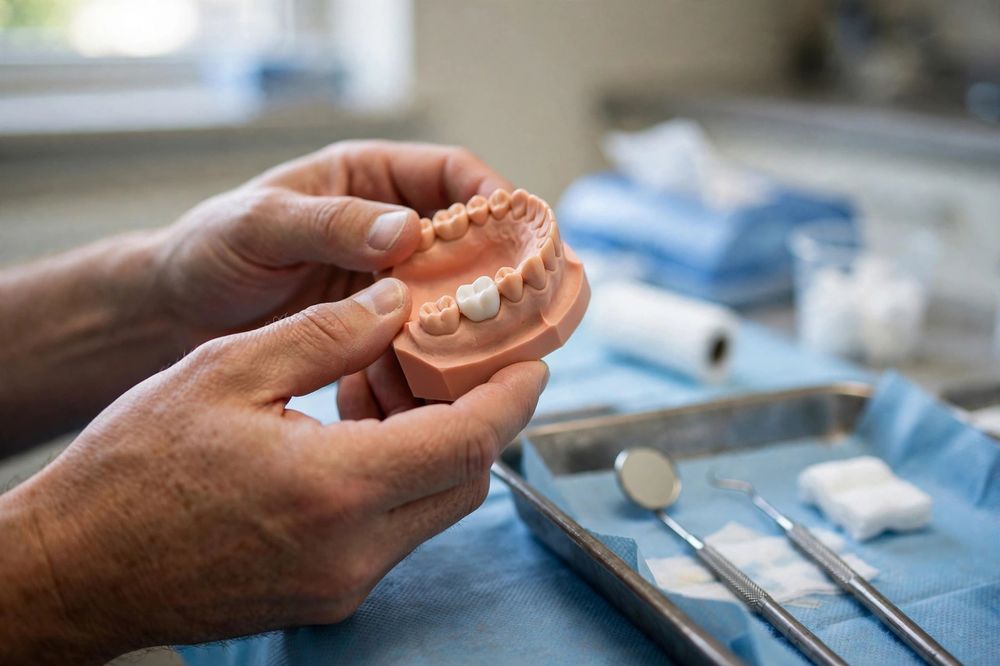
Most fillings placed today are tooth-coloured composite resin — the “white filling” most patients picture. Composite bonds directly to the tooth, usually requires removing less healthy tooth structure, and blends with the surrounding enamel, which matters most on visible teeth. The silver-coloured alternative, amalgam, has a long track record in back teeth and tolerates moisture during placement better, but it does not bond to the tooth, requires a more mechanical shape to stay in place, and is plainly visible when you laugh or yawn.
Neither material is right for every tooth. Size, location, bite forces and how dry the area can be kept during placement all feed the decision, and your dentist will tell you which material suits your tooth and why. What matters more than the material debate is timing: a small cavity repaired early is a smaller, simpler filling in either material.
When a Filling Is Not Enough
A filling works when enough strong tooth remains around it. When decay or an old filling has taken most of the tooth, when a cusp has cracked, or when a tooth has had root canal treatment and needs protection, a filling alone leaves weak walls that flex every time you chew — until one breaks. Those teeth are usually better served by a crown, which wraps and holds the whole tooth together. Our guide to when a tooth needs a crown instead of a filling walks through that decision in detail.
And if decay has already reached the nerve, a filling cannot fix it at all — the choice at that point is between root canal treatment and removal, and it deserves its own assessment rather than a guess. The honest sequence is always the same: examine, X-ray, then decide together.
How Long Do Dental Fillings in Scarborough Last?
Fillings are durable repairs, not lifetime parts. How long one serves depends on its size and position, the material, your bite forces and grinding habits, and how well the tooth is cleaned at home. In a widely cited systematic review and meta-analysis of posterior (back-tooth) restorations published in the Journal of Dental Research, Opdam and colleagues found that both composite and amalgam fillings commonly serve for many years, with failure more often caused by new decay at the filling’s edge or by fracture than by the material simply wearing out — outcomes are reported as survival of the restoration over time, and no filling can honestly be promised to last a set number of years.
The practical takeaway is that check-ups are where fillings are protected: a small leak or crack at a filling’s edge, caught early, is often a small repair — caught late, it can mean a crown or losing the tooth.
Looking After a New Filling
- Wait for the freezing to wear off before eating — a numb cheek or tongue is easy to bite without feeling it. Tooth-coloured fillings are set before you leave; amalgam needs more time to harden fully, and your dentist will tell you how long to go easy on that side.
- Expect a short settling period. A new filling can feel slightly different to your tongue for a day or two while you get used to it.
- If your bite feels high — one tooth hitting first when you close — call the clinic. A small adjustment is quick, and chewing on a high filling can make the tooth sore.
- Brush and floss normally. The edge where filling meets tooth is exactly where new decay likes to start, so that margin deserves the same daily cleaning as the rest of the tooth.
Coverage, Honestly: CDCP, Insurance and Quotes
Fillings are one of the core restorative services that may be covered for eligible patients under the Canadian Dental Care Plan. Eligibility comes first: the CDCP is for Canadian residents without access to dental insurance whose adjusted family net income is under $90,000, and coverage follows the CDCP fee guide rather than the clinic’s full fee, so it is never presented as complete coverage. AF Dental direct-bills the CDCP, and the team can check your eligibility before treatment. You can read the full picture on our Canadian Dental Care Plan page.
For private insurance and for treatment not covered by any plan, you will always be told what a filling involves and given an exact written quote before work begins — no figure is quoted sight unseen, because the honest price depends on the tooth, the material and the size of the repair. To book an assessment, book an appointment or call the clinic.
References
- Canadian Dental Association (CDA) — patient guidance on tooth decay and fillings.
- Ontario Dental Association (ODA) — patient resources on restorative dental care.
- Royal College of Dental Surgeons of Ontario (RCDSO) — the regulator for dentists in Ontario, including its public register.
- Government of Canada — Canadian Dental Care Plan — eligibility and covered services.
- Opdam NJM et al. Longevity of posterior composite restorations: a systematic review and meta-analysis. Journal of Dental Research, 2014.
Frequently Asked Questions About Dental Fillings in Scarborough
Does getting a filling hurt?
The tooth is numbed with local anesthetic before work begins, so the area is blocked while you stay awake. You will feel pressure and vibration from the instruments, and the injection itself can pinch briefly. Some tenderness for a short time afterwards is common as the anesthetic wears off. No honest clinic promises a completely sensation-free appointment — what can be promised is numbing first, a check that it has taken effect, and stopping to add more if you feel sharpness.
How long does a filling appointment take?
It depends on how many teeth are being treated and how large the decay is. A single small filling is usually completed within one ordinary appointment; several fillings, or a deep one, take longer. Your dentist can give you a realistic time estimate once the X-rays have been reviewed — ask when you book so you can plan your day.
Can I eat after a filling?
Wait until the freezing has fully worn off before eating, so you do not bite a numb cheek, lip or tongue. Tooth-coloured composite fillings are hardened with a curing light before you leave, so they can be used gently once feeling returns. Amalgam fillings keep hardening for several hours, so your dentist may ask you to avoid chewing hard foods on that side for the rest of the day.
How long will my filling last?
There is no honest fixed number. Systematic-review evidence on back-tooth fillings (Opdam et al., Journal of Dental Research) reports restorations commonly serving for many years, with survival depending on the filling’s size and position, the material, bite forces and home care. Regular check-ups matter because a filling that is starting to leak or crack can often be repaired or replaced on your terms, rather than after it fails.
My filling feels high when I bite. What should I do?
Call the clinic and say exactly that. If one tooth meets first when you close, the filling needs a small bite adjustment — a quick appointment that should not be put off, because chewing on a high spot can bruise the ligament around the tooth and make it ache. Do not wait for it to “wear in” on its own.
Does the CDCP cover dental fillings?
Fillings are among the services that may be covered for eligible CDCP patients. Eligibility is based on residency, having no access to dental insurance, and an adjusted family net income under $90,000; coverage follows the CDCP fee guide, which may not match the clinic’s full fee. AF Dental direct-bills the CDCP and can confirm your eligibility before treatment begins.
Can a cavity heal on its own without a filling?
The very earliest stage of decay — a soft spot still inside the enamel, before a hole forms — can sometimes be hardened again with fluoride and careful home care, and your dentist may choose to monitor it. Once decay has broken through into a cavity, it cannot heal itself: the bacteria and damaged tissue have to be removed and the hole sealed. That is why the monitor-versus-fill decision is made from X-rays, not guesswork.
What happens if I put off a filling?
Decay keeps spreading. A cavity that is a small filling today can reach the inner dentin, then the nerve — at which point the conversation changes from a filling to root canal treatment or removing the tooth, and pain or infection can arrive in between. Putting a filling off does not save the appointment; it usually trades a small one for a bigger one. If cost is the concern, ask for the exact written quote and your coverage options before deciding.
If you have a tooth that catches food, aches when you bite, or you have been told you have a cavity, an assessment is the honest next step. Call AF Dental in Scarborough at (416) 792-6940 — Monday, Wednesday, Thursday, Friday and Saturday 9–6, Sunday 11–5, closed Tuesdays.