A small chip, a gap between front teeth, or a tooth that looks shorter than its neighbour can bother you every time you smile. Composite bonding in Scarborough is one of the simplest ways a dentist can repair that kind of small problem: a tooth-coloured resin is shaped directly on the tooth, hardened with a light, and polished in a single visit. This guide explains what bonding can and cannot do, who it suits, and how to care for it — honestly, including its limits.
Table of Contents
- What composite bonding is
- What bonding can fix
- What bonding cannot fix
- What happens at a bonding appointment
- How long bonding lasts
- Caring for bonded teeth
- Bonding, veneers, or a crown?
- Bonding and the CDCP
- Frequently asked questions
- References
What composite bonding is
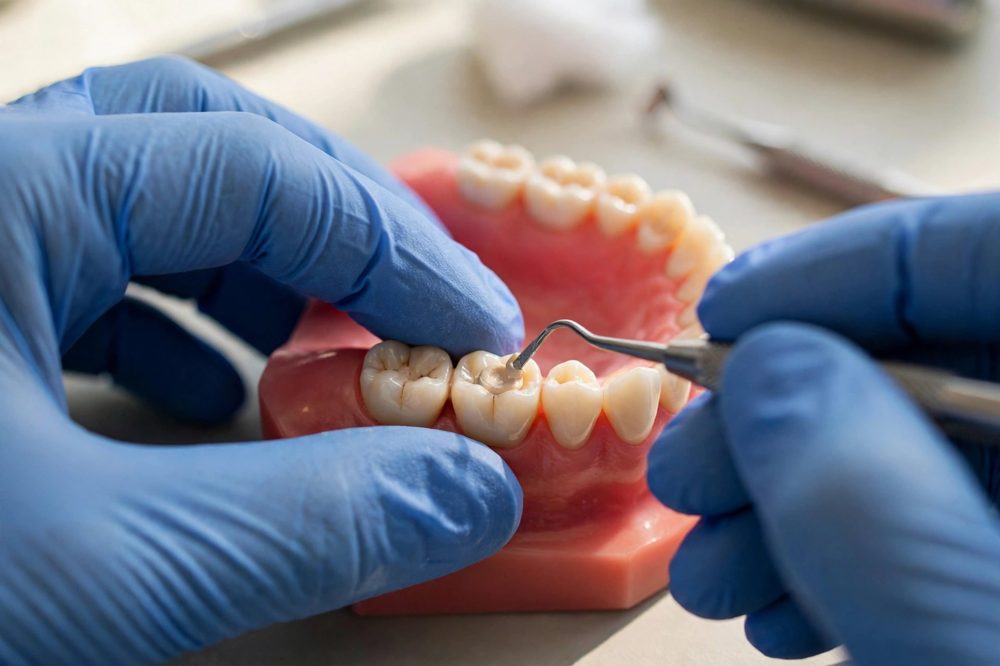
Composite bonding uses the same tooth-coloured resin material used for white fillings. The dentist prepares the surface, applies the resin in layers, shapes it to match the tooth, hardens each layer with a curing light, then trims and polishes it. Because little or no natural tooth is removed, bonding is one of the most conservative cosmetic repairs. Learn more about the service on our composite bonding and veneers care in Scarborough page.
What bonding can fix
Bonding is often considered for small chips, minor cracks in enamel, small gaps, slightly uneven edges, and covering a single discoloured tooth. It can also rebuild a worn edge. The key word is small: bonding works best when most of the natural tooth is still healthy and strong.
What bonding cannot fix
Bonding is not a substitute for a crown on a heavily broken or root-treated tooth, it cannot close large gaps the way orthodontics can, and it will not change the colour of a whole smile — resin does not respond to whitening, and a bonded area can pick up stain over time. If decay is present, that must be treated first, often with a dental filling in Scarborough. Your dentist will say plainly when another option is the better plan.
What happens at a bonding appointment
After an examination (and X-rays if needed), the shade is matched to your natural tooth. The surface is prepared, resin is applied and shaped, hardened, and polished. Most small repairs are completed in one visit. Freezing is often not needed for surface-only work, but if the repair is deeper your dentist will discuss numbing — comfort is explained by mechanism, never promised.
How long bonding lasts
Bonding is less durable than porcelain. Reported longevity varies widely with bite forces, habits, and the size of the repair; resin repairs commonly need maintenance, polishing, or replacement sooner than a veneer or crown. Treat any specific lifespan figure cautiously — what matters is regular review at check-ups so small wear is caught early. The Ontario Dental Association and the Canadian Dental Association both describe bonding as a conservative, repairable option rather than a permanent one.
Caring for bonded teeth
Brush twice daily with fluoride toothpaste, clean between teeth daily, and avoid biting ice, pens, or very hard foods with a bonded front tooth. Coffee, tea, and red wine can stain resin faster than enamel, so rinsing after them helps. Keep regular dental exams and check-ups in Scarborough so the edges of the bonding are checked.
Bonding, veneers, or a crown?
Bonding: conservative, one visit, repairable, best for small repairs. A veneer: a thin porcelain shell, usually for larger shape or colour changes across the front of a tooth, and it requires removing some enamel. A crown: covers the whole tooth, used when strength is the main concern. The right choice depends on how much healthy tooth remains — that is an assessment decision, not a shopping decision.
Bonding and the CDCP
The Canadian Dental Care Plan covers specific services for eligible Canadians, and cosmetic treatment is not covered. Whether any part of an appointment is eligible depends on your coverage and the clinical need, assessed first. See our Canadian Dental Care Plan page for eligibility information, and Canada.ca for the current federal criteria.
Wondering if a chip or gap can be repaired simply? Call AF Dental in Scarborough at (416) 792-6940 or book an appointment for an assessment.
Frequently asked questions
Does composite bonding hurt?
Surface bonding usually needs little or no freezing because little tooth is removed. Deeper repairs may need local anaesthetic. Your dentist will explain what to expect for your tooth before starting.
How long does a bonding appointment take?
A single small repair is usually completed in one visit. The exact time depends on the size and position of the repair, confirmed at your assessment.
Will bonded teeth look natural?
The resin is shade-matched and polished to blend with the surrounding tooth. Results vary with the size of the repair and the colour match possible, and no specific outcome can be guaranteed.
Can bonding fix a gap between my front teeth?
Small gaps can sometimes be closed with bonding. Larger gaps, or gaps caused by bite problems, may be better treated with orthodontics. An assessment will show which applies to you.
Does bonding stain?
Yes, resin can pick up stain from coffee, tea, red wine, and smoking faster than natural enamel. Polishing at check-ups helps, and heavily stained bonding can be resurfaced or replaced.
What happens if bonding chips?
Small chips in bonding can often be repaired by adding new resin. Contact the clinic if a bonded edge feels rough or a piece comes away.
Is bonding covered by the CDCP?
Cosmetic bonding is not covered by the CDCP. If the tooth also needs treatment for decay or damage, eligibility is assessed case by case — ask at your assessment.
Can I whiten my teeth after bonding?
Whitening gels do not change the colour of resin, so whitening after bonding can leave a mismatch. If you are considering whitening, discuss the order of treatment with your dentist first.
Who should not have bonding?
People with untreated decay, gum disease, or heavy bite forces on the tooth in question may need other treatment first or instead. Bonding also needs the tooth to be dry and isolated during placement, which is not always possible for every tooth.
References
Ontario Dental Association — oda.ca. Canadian Dental Association — cda-adc.ca. Government of Canada, Canadian Dental Care Plan — Canada.ca.