
Why Kids Get Cavities — and Why Fillings Matter at Every Age
If you searched for kids dental fillings Scarborough, you probably have one question first: does a baby tooth really need a filling? A cavity is tooth decay that has eaten through the enamel into the softer layer underneath. In children, decay spreads faster than in adults: baby teeth have thinner enamel, and young kids are still learning to brush well. The Canadian Dental Association notes that early childhood tooth decay is one of the most common chronic diseases of childhood — and it is largely preventable.
Left alone, a small cavity becomes a bigger one, then pain, then infection, then a tooth that has to come out early. A filling stops that chain at the first link. If your child says a tooth hurts with cold drinks or sweets, or you can see a dark spot or a hole, book an assessment — children’s dentistry at AF Dental covers exams and fillings for kids of all ages.
AF Dental, Unit #118, 2190 McNicoll Avenue, Scarborough — (416) 792-6940. We see children for fillings during our regular hours: Monday, Wednesday, Thursday, Friday and Saturday 9–6, and Sunday 11–5. We are closed Tuesdays.
Baby Teeth vs. Permanent Teeth: Do Baby Teeth Really Need Fillings?
Yes — and this surprises many parents. Baby teeth hold the space for the permanent teeth growing underneath them. If a decayed baby tooth is lost years early, the neighbouring teeth drift into the gap, and the permanent tooth can erupt crooked or blocked. Baby teeth also matter for chewing, clear speech, and confidence at school. The Ontario Dental Association’s guidance for parents is clear: cavities in baby teeth should be treated, not watched until they fall out. The exception is a tooth that is already loose and about to come out on its own — your dentist will tell you honestly if that is the case after looking at the tooth and an X-ray.
Signs Your Child Might Need a Filling
- Sensitivity or pain when eating sweet, hot or cold foods
- A visible dark spot, white chalky patch, or hole in a tooth
- Complaining about one specific tooth, or chewing on one side only
- Food constantly packing into the same spot between teeth
- Bad breath that brushing doesn’t fix
- A chipped or cracked tooth, even if it doesn’t hurt
Kids don’t always report tooth pain the way adults do — a child who suddenly refuses crunchy food or wakes at night may be telling you something. When in doubt, an exam is quick and the answer is honest either way.
What Happens at a Kids’ Filling Appointment
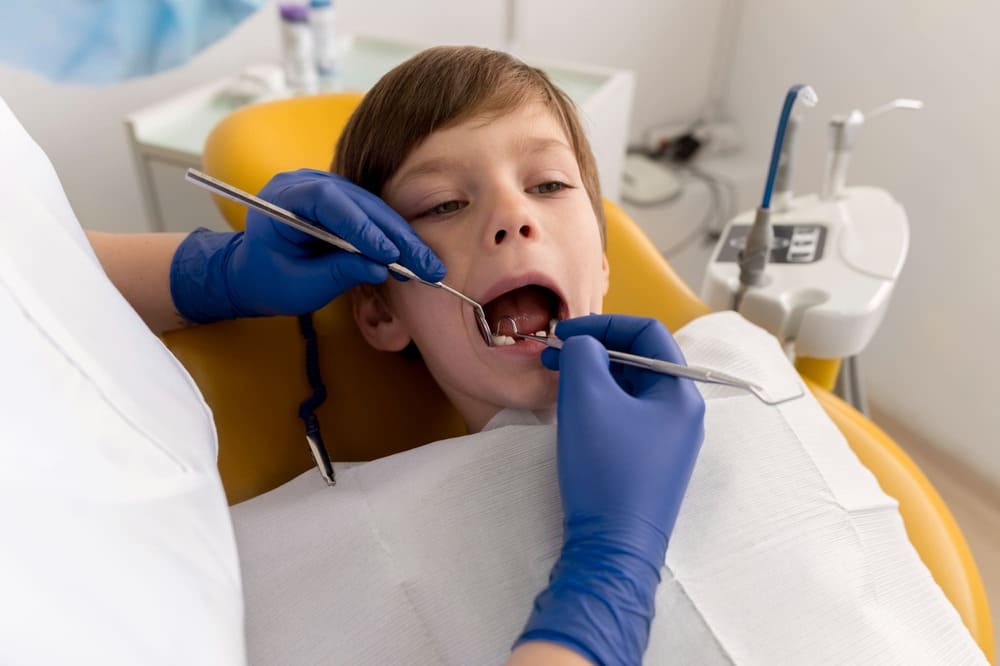
1. A gentle look first. We examine the tooth and take a small X-ray if needed, so we know exactly how deep the decay goes before anything starts.
2. Numbing, explained in kid language. The area is numbed so the treatment itself is comfortable. We explain every step in words a child understands — no surprises.
3. The decay comes out. The softened, decayed part of the tooth is removed, and the space is cleaned.
4. The filling goes in. A tooth-coloured filling material is placed, shaped to the tooth, and hardened with a curing light.
5. Bite check and polish. Your child bites down, we adjust anything high, and polish the filling smooth.
Most single fillings take well under an hour. If your child is anxious, tell us when you book — we pace the appointment around them. Parents are welcome to ask about every step before we start.
Filling Materials: What’s Used for Kids
For most children’s fillings we use tooth-coloured composite resin — it bonds to the tooth, looks natural, and is mercury-free. For baby teeth that will fall out in a year or two, a glass ionomer filling is sometimes the better choice: it releases fluoride, which helps protect the tooth while it lasts.
Stainless steel crowns are used when a baby tooth is too broken down for a regular filling — that is a different treatment, and we would discuss it with you first. The Ontario Dental Association and the Canadian Dental Association both describe these as standard, well-established materials. What we will never do is pressure you into the most expensive option — the right material depends on the tooth, its remaining lifespan, and your child’s needs.
After the Filling: The First 24 Hours
- Numbness can last 1–3 hours — watch that your child doesn’t chew their cheek or lip while it wears off.
- Soft foods are easiest until the numbness is gone.
- Mild sensitivity to cold for a few days is common; pain that grows, wakes your child at night, or lasts beyond a week is not — call us.
- Brushing and flossing resume the same day, gently around the new filling.
Preventing the Next Cavity
A filling fixes one tooth; habits fix the future. Brush twice a day with a pea-sized amount of fluoride toothpaste (a rice-grain smear under age 3), floss where teeth touch, and keep juice and sticky snacks occasional rather than constant — it is the frequency of sugar, not just the amount, that feeds decay. Regular checkups catch small problems while they are still small fillings. The Canadian Dental Association’s children’s oral health resources cover brushing technique and fluoride in plain language, and we are happy to show you both at your child’s visit.
CDCP and Kids’ Fillings
Fillings for children are among the services the Canadian Dental Care Plan covers for eligible families. AF Dental participates in the CDCP and direct-bills it. Coverage depends on your family’s eligibility and the CDCP fee guide — we assess first and tell you exactly what applies before treatment, so there are never surprises. Our CDCP Scarborough page explains eligibility and how to apply through Service Canada.
FAQs About Kids’ Dental Fillings
- Do baby teeth really need fillings if they’re going to fall out anyway?
Yes, in most cases. Baby teeth hold space for the permanent teeth, and untreated decay can cause pain, infection, and early tooth loss that lets other teeth drift. The Ontario Dental Association advises treating cavities in baby teeth rather than watching them. If a tooth is already loose and about to fall out, your dentist may honestly advise leaving it — that call is made after an exam and X-ray.
- Will the filling appointment hurt my child?
The area is numbed before treatment, so the procedure itself should be comfortable. We explain each step in kid-friendly language and pace the visit around your child. Some mild sensitivity afterwards is normal; if pain increases or wakes your child at night, call us at (416) 792-6940.
- How long do kids’ fillings last?
It depends on the tooth and habits. A filling in a baby tooth needs to last until that tooth falls out naturally — often a few years. Permanent-tooth fillings last longer with good brushing and regular checkups. No filling lasts forever, and we check every filling at each recall visit.
- What filling material is best for children?
For most children, tooth-coloured composite is the standard choice — it bonds to the tooth and looks natural. Glass ionomer is sometimes better for baby teeth close to falling out, because it releases fluoride. Stainless steel crowns are reserved for teeth too damaged for a regular filling. Your dentist will recommend based on the tooth, not on price.
- Are dental X-rays safe for my child?
Yes. Modern digital X-rays use very low radiation, and we take them only when needed to see decay between teeth or below the surface — decay that can’t be seen or treated properly without one. The Canadian Dental Association notes that the benefit of finding decay early far outweighs the minimal risk. Lead shielding is used as standard.
- Does the CDCP cover my child’s filling?
Fillings are among the services the CDCP covers for eligible families, and AF Dental participates and direct-bills. What applies to your family depends on eligibility and the CDCP fee guide — we confirm your coverage before treatment so there are no surprises. Call (416) 792-6940 to check.
- How can I tell if my child has a cavity before it hurts?
Often you can’t — early decay may show only as a white chalky patch, or nothing visible at all. That is why regular checkups and, when needed, X-rays matter: they catch decay while a small filling still fixes it. Watch for sensitivity to sweets or cold, food packing between teeth, or a dark spot.
- When should my child first see a dentist?
The Canadian Dental Association recommends a first visit by age one, or within six months of the first tooth erupting. Early visits are short and gentle — mostly a look, guidance for you, and getting your child comfortable with the office before any treatment is ever needed.
References
Ontario Dental Association — www.oda.ca · Canadian Dental Association — www.cda-adc.ca · Royal College of Dental Surgeons of Ontario — www.rcdso.org · Health Canada / Canadian Dental Care Plan — Canada.ca CDCP page
Ready to book? If your child has a tooth that hurts, a spot you’ve noticed, or is simply due for a checkup, call AF Dental at (416) 792-6940 or visit us at Unit #118, 2190 McNicoll Avenue, Scarborough. Hours: Monday, Wednesday, Thursday, Friday and Saturday 9–6; Sunday 11–5; closed Tuesdays. We’ll assess honestly and explain every option before anything is done.