
It usually happens at the worst possible moment: a tooth cracks on something crunchy at lunch, a crown pops off on a Saturday, or a toothache that was “probably nothing” on Friday is throbbing by Sunday morning — the kind of problem a same day dentist scarborough patients call about first. The first question is almost always the same one: is this a real emergency, or can it wait?
This guide answers that question the way a dental team does. It sorts the most common problems into “call now,” “protect it and call when we open,” and “this is a hospital problem, not a dentist problem” — and it walks you through the first hour for each one, because what you do in that first hour can be the difference between saving a tooth and losing it.
AF Dental is in Scarborough, at McNicoll and Midland, and we set time aside for patients in pain during our regular hours. If you’d rather start with the service itself, read about same-day and emergency dental care in Scarborough first, then come back here for the triage guide.
On this page:
- What Counts as a True Dental Emergency
- What Can Wait a Day or Two (and How to Protect the Tooth Meanwhile)
- The First Hour: Step by Step for the Most Common Emergencies
- When It’s an ER or 911 Problem, Not a Dentist Problem
- How Same-Day Visits Work at AF Dental
- What to Bring — and What the Dentist Will Do First
- References
- Frequently Asked Questions About Same-Day Dental Visits in Scarborough
What Counts as a True Dental Emergency
A true dental emergency is a problem where waiting makes the outcome worse. If any of these describe you, call (416) 792-6940 as soon as we open — or right away if we’re open:
- A knocked-out permanent tooth. This is the most time-sensitive problem in dentistry. The tooth has its best chance of being saved if it is back in its socket within about an hour — see the first-hour steps below.
- A broken tooth with pain, a sharp edge cutting your tongue or cheek, or a large piece missing. The inside of the tooth may be exposed, and exposed teeth get infected.
- Severe tooth pain — pain that throbs, wakes you at night, or doesn’t respond to over-the-counter pain relief. Pain like this usually means the nerve inside the tooth is inflamed or infected, and it does not heal on its own.
- Swelling in the gum, face or jaw, with or without pain. Swelling means infection, and dental infections can spread.
- Bleeding from the mouth that doesn’t stop after 15–20 minutes of gentle pressure with a clean cloth or gauze.
- A crown, filling or tooth that came out along with pain or sensitivity — the exposed tooth underneath needs protection quickly.
- An injury to the mouth, teeth or jaw from a fall, a sport or an accident.
When you call, tell us what happened and when — that is exactly the information the team uses to decide how quickly you need to be seen and to have the right room and instruments ready.
What Can Wait a Day or Two (and How to Protect the Tooth Meanwhile)
Not every dental problem is an emergency, and knowing that can save you a panicked night. These problems should still be booked promptly — call us on the next day we’re open — but they can usually wait a day or two if you protect the area:
- A small chip with no pain and no sharp edge. Smooth chips are mostly a comfort and appearance issue. Avoid chewing on that side and keep the area clean.
- A lost filling or crown with no pain. The tooth underneath is exposed and weaker than it looks, so don’t test it — but if it doesn’t hurt, it can usually wait for the next open day. The first-hour steps below show you how to protect it (and how to keep a crown safe so it may be re-cemented).
- A dull, mild toothache that comes and goes and responds to over-the-counter pain relief. Mild does not mean ignore it: a tooth that aches at all is telling you something, and it should be examined — but it is not a middle-of-the-night problem.
- A broken denture or a sore spot under a denture. Uncomfortable and worth a prompt appointment, but not an emergency. Don’t try to glue or adjust a denture yourself — home repairs usually make a proper repair harder or impossible.
- Sensitivity to cold that fades within seconds after the cold drink is gone. Lingering sensitivity — pain that stays for 30 seconds or more after the source is removed — is a different story: treat that as “call now.”
While you wait: keep the area clean with gentle brushing and warm salt-water rinses, chew on the other side, stick to soft foods, and use over-the-counter pain relief as directed on the package if you need it. Never place an aspirin tablet directly on the gum or tooth — it burns the tissue and does not help the tooth.
The First Hour: Step by Step for the Most Common Emergencies
Whatever happened, the first steps are the same: stay calm, find any piece of tooth or restoration that came out, and call (416) 792-6940 if we are open. Then follow the steps for your situation.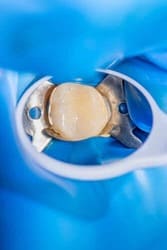
A Knocked-Out Tooth
- Pick the tooth up by the crown — the white part you normally see — never by the root.
- If it’s dirty, rinse it briefly (a few seconds under lukewarm water). Do not scrub it, do not use soap, and do not wrap it in tissue.
- If you can, put it back in the socket. Hold it by the crown, line it up the way the neighbouring teeth sit, and press it gently into place. Bite softly on a clean cloth to hold it there.
- If you can’t reinsert it, keep it moist. The best places are in a small container of milk, or tucked inside your cheek (for an adult or older child who won’t swallow it). Plain water is a last resort — a tooth dries out fast, and a dried-out tooth can rarely be saved.
- Get to a dentist as fast as you can. The first 30–60 minutes give the tooth its best chance. Call us on the way if we’re open.
- One important exception: never reinsert a knocked-out baby tooth. Putting it back can damage the permanent tooth developing underneath. Bring the child in to be checked, and bring the tooth with you.
A Broken or Chipped Tooth
- Find the broken piece if you can, and bring it with you — sometimes it can be bonded back on.
- Rinse your mouth gently with warm water to clear away fragments.
- If the edge is sharp, cover it with a small piece of sugar-free gum or dental wax (sold at pharmacies) so it doesn’t cut your tongue or cheek.
- If there’s swelling, hold a cold pack against the outside of your cheek, on and off, to keep it down.
- Call the same day if there is pain, a large break, or a pink/red spot visible in the break (that can mean the nerve is exposed).
A Lost Filling or a Crown That Came Off
- Keep the crown. Put it in a clean container and bring it to your appointment — if the tooth underneath is undamaged, a crown can often be re-cemented rather than replaced.
- Protect the exposed tooth. It will be sensitive and weaker than a whole tooth. Chew on the other side and avoid very hot, cold or sticky foods on it.
- Temporary coverings from the pharmacy (temporary filling material) can protect the tooth for a short time if you can’t be seen the same day — follow the package directions, and treat it as a bridge to your appointment, not a repair.
- Do not use household glue on a crown or tooth — ever. It can damage the tooth, poison the tissue, and turn a simple re-cement into a replacement.
Swelling in the Gum, Face or Jaw
Swelling means infection until proven otherwise, and it is always a “call now” problem during our open hours.
- Call the clinic the same day you notice it — don’t wait to see if it goes down on its own.
- Hold a cold pack on the outside of the cheek to limit swelling, and keep your head raised.
- Never apply heat to a swollen face, and never try to drain a swollen gum yourself.
- Go to a hospital emergency department or call 911 if the swelling is spreading quickly, moving toward your eye, making it hard to swallow or breathe, or comes with a fever and feeling very unwell — those are signs the infection needs hospital care, not a dental appointment.
- Swelling around a back tooth or under the jaw can also come from a wisdom tooth whose gum flap has trapped food and bacteria; our page on wisdom teeth removal at AF Dental explains how those teeth are assessed.
A Severe Toothache
- Rinse with warm salt water and gently floss around the sore tooth — sometimes trapped food is adding pressure (if the pain stops completely after flossing, still book an examination; pain that was there has a cause).
- Use over-the-counter pain relief as directed on the package if you can take it safely. Never put the tablet on the gum.
- A cold pack on the cheek can help if there is any swelling or throbbing.
- Call as soon as we open. A toothache this strong usually means the nerve is inflamed or the tooth is infected; it will not resolve on its own, and it is far easier — and kinder to the tooth — to treat it early.
When It’s an ER or 911 Problem, Not a Dentist Problem
Some situations need a hospital first, and no dental clinic — including ours — is the right first stop. Go to a hospital emergency department or call 911 if you have:
- Trouble breathing or swallowing, or swelling that is closing your throat or moving toward your eye.
- Bleeding that won’t stop after 15–20 minutes of firm pressure.
- A suspected broken jaw — you can’t open or close your mouth properly after an injury, or your bite suddenly feels wrong after a blow to the face.
- A head injury along with the dental injury — you were briefly knocked out, are dizzy, vomiting, or confused.
- Facial swelling with a high fever, or swelling in someone whose immune system is weakened by illness or medication.
- A knocked-out tooth plus any of the above.
AF Dental does not offer an after-hours emergency service: outside our open hours, the hospital is the right call for anything severe, and we will gladly take over your dental care once you’re safe. If it is not severe, protect the tooth using the steps above and call us at (416) 792-6940 when we open — Mon, Wed, Thu, Fri and Sat from 9, and Sundays from 11. We are closed on Tuesdays.
How Same-Day Visits Work at AF Dental
Here is exactly how it works at a same day dentist scarborough clinic, so there are no surprises:
- Our hours: Monday, Wednesday, Thursday, Friday and Saturday 9 am–6 pm, Sunday 11 am–5 pm, closed Tuesday. We see emergency patients during these hours — including Sundays, which is when many Scarborough clinics are closed.
- Call as early as you can. Same-day time is held for urgent problems, and it fills in the order patients call. Call (416) 792-6940 when you know there’s a problem — don’t wait until the end of the day hoping it will settle.
- Tell us what happened. “I broke a molar an hour ago,” “my crown came off and it hurts,” “my face is swelling” — that one sentence lets the team triage your visit properly and prepare.
- If the day is genuinely full, the team will say so honestly, protect you with first-aid advice, and offer the soonest available appointment. We would rather tell you the truth than park you in a waiting room for hours.
- If you’re a CDCP patient, tell us when you call. AF Dental accepts CDCP patients and direct-bills the plan for covered services — see the last question in the FAQ below for how that works with urgent care.
- New patients are welcome for urgent problems. You do not need to be an existing patient of the clinic to call with an emergency.
What to Bring — and What the Dentist Will Do First
What to bring: the tooth piece, crown or restoration that came out (in a clean container, in milk if it’s a whole tooth) · a list of your medications · your health card and any insurance or CDCP member information · and, if the problem followed an accident at work, in a car or in sport, a note of when and how it happened, since that can matter for coverage paperwork.
What the dentist will do first: examine the tooth and the area around it, take an X-ray if one is needed to see the root and bone, and then tell you plainly what is wrong and what the options are — including what can be done today to get you out of pain and protect the tooth, and what, if anything, is better done as a planned follow-up. Treatment decisions are yours; the dentist’s job at an urgent visit is to stop the problem from getting worse and to lay out the choices honestly.
If you’re in pain right now and we’re open, don’t finish the article first — call (416) 792-6940. If you’d like the full picture of the service itself, our page on same-day and emergency dental care in Scarborough explains what we treat, and you can also book an appointment online. AF Dental is at Unit #118, 2190 McNicoll Avenue in Scarborough, and Dr. Roya Aminnezhad and our team will take it from there.
References
The guidance in this article reflects Canadian dental practice and patient-education resources from the Ontario Dental Association, the Canadian Dental Association and the Royal College of Dental Surgeons of Ontario (RCDSO). Dentists in Ontario are licensed by the RCDSO, and patients can verify a dentist’s registration on the RCDSO website.
Information about Canadian Dental Care Plan coverage, including which urgent and emergency services are covered, is from the Government of Canada’s Canadian Dental Care Plan pages (Canada.ca), linked in the questions below. CDCP rules can change; if anything here differs from Canada.ca, Canada.ca is correct.
Frequently Asked Questions About Same-Day Dental Visits in Scarborough
- Can I be seen today if I call in the morning?
Often, yes — and calling in the morning is exactly how to give yourself the best chance. We hold time during our open hours for patients in pain, and those spots are given out in the order people call. If the day fills up, the team will tell you honestly, give you first-aid advice to protect the tooth, and offer the soonest appointment available. What we won’t do is promise in advance that every caller can always be seen the same day — no clinic can promise that truthfully. So: call (416) 792-6940 as early as you can, and tell us what happened.
- My tooth was knocked out — how fast do I need a dentist?
As fast as you possibly can — this is the one dental problem where minutes matter. A permanent tooth that is put back in its socket within roughly the first 30–60 minutes has the best chance of surviving. Pick the tooth up by the crown (never the root), rinse it briefly if it’s dirty, and if you can, press it gently back into the socket. If you can’t, keep it in milk or inside your cheek so it stays moist, and get to a dentist immediately — call us on the way if we’re open. One exception: never put a knocked-out baby tooth back in, because that can damage the permanent tooth underneath. Bring your child in to be checked instead.
- It’s Sunday — are any Scarborough dentists open?
Yes — AF Dental is open on Sundays from 11 am to 5 pm, as well as Saturdays from 9 am to 6 pm. Many dental clinics in Scarborough close for the whole weekend, which is exactly why Sunday toothaches end up waiting until Monday. If your problem happens on a Sunday during our hours, call (416) 792-6940 and tell us what happened. We are closed on Tuesdays; on a Tuesday, use the first-aid steps in this guide, go to a hospital emergency department for anything severe, and call us Wednesday morning for everything else.
- What if my emergency happens at night?
Honestly: AF Dental does not run an after-hours emergency service, and we won’t pretend otherwise. If the problem is severe — bleeding that won’t stop, trouble breathing or swallowing, swelling that is spreading or moving toward your eye, a possible broken jaw, or facial swelling with a high fever — go to a hospital emergency department or call 911, at any hour. If it is not severe, protect the tooth overnight (keep a lost crown safe in a container, keep a knocked-out tooth in milk and treat it as first priority in the morning, use a cold pack for swelling, and take over-the-counter pain relief as directed), then call us at (416) 792-6940 the moment we open. That combination — hospital for the severe, first aid plus an early call for the rest — is the safe answer at night.
- A piece of my tooth broke off but it doesn’t hurt — can it wait?
Usually it can wait a day or two — but it should not wait indefinitely, and there are exceptions. Call the same day if the break is large, if a sharp edge is cutting your tongue or cheek, if you can see a pink or red spot in the broken surface (a sign the nerve may be exposed), or if the tooth becomes sensitive to hot, cold or biting. If none of that applies, protect the tooth: keep any broken piece you find, chew on the other side, keep the area clean, and book on the next day we’re open. A break that doesn’t hurt still weakens the tooth, and small breaks are much simpler to repair than teeth that break a second time or become infected while waiting.
- My crown came off — what should I do until my appointment?
First, find the crown and keep it safe in a clean container — if the tooth underneath is healthy, the crown can often be re-cemented, which is simpler than making a new one. Don’t try to glue it back yourself: household glues can damage the tooth and make a proper repair impossible. Until you’re seen, chew on the other side, avoid sticky and very hot or cold foods on that tooth (it will be sensitive), and keep the area clean. Pharmacy temporary filling material can protect the tooth briefly if your appointment isn’t the same day. Call (416) 792-6940 the same day if there’s pain; otherwise, book for the next open day — a crownless tooth shouldn’t be left for weeks.
- Should I take painkillers before my appointment — and which kind?
You can take over-the-counter pain relief before your visit if you can take it safely — follow the package directions and your pharmacist’s advice, especially if you take other medication or have liver, kidney, stomach or asthma issues. Tell the dental team what you’ve taken and when; it helps them assess you properly. Two cautions: never place an aspirin or any tablet directly against the gum or tooth (it burns the tissue and doesn’t reach the tooth’s nerve), and don’t use leftover antibiotics from an old prescription — antibiotics are not painkillers, dental infections need the source treated at the dentist, and taking the wrong course can mask symptoms without fixing anything. If pain is severe enough that normal doses aren’t touching it, treat that as a “call now” sign, not a reason to take more than directed.
- I’m a CDCP patient — does the Canadian Dental Care Plan cover urgent dental visits?
For eligible patients, yes — emergency exams are among the services the Canadian Dental Care Plan covers, along with X-rays and treatments such as fillings, pain control for diseased teeth and tooth removal; see what the CDCP covers (Canada.ca) for the official list. The honest details: your eligibility is confirmed by the federal program first (no access to dental insurance, adjusted family net income under $90,000, a filed tax return and Canadian tax residency); the plan pays a percentage of its own established fees under the CDCP fee guide, which may not match the clinic’s full fee, so an additional charge is possible and will be explained before treatment; and AF Dental direct-bills the CDCP, so you don’t pay the covered portion up front and claim it back. Our page on the Canadian Dental Care Plan (CDCP) at AF Dental walks through eligibility and how billing works here. Dental implants are not part of standard CDCP coverage, and orthodontic and cosmetic treatment are not covered — but none of that affects being seen for urgent care.